
| Prof. Jianping GouUniversiti Pendidikan Sultan Idris (UPSI), Malaysia Brief Introduction: Jianping Gou received the Ph.D. degree in computer science from University of Electronic Science and Technology of China, Chengdu, China, in 2012. He was a Post-Doctoral Research Fellow with The University of Sydney. Now, he is currently a professor and doctoral Supervisor in College of Computer and Information Science, College of Software, Southwest University, Chongqing, China. His current research interests are artificial intelligence, pattern recognition and machine learning. His research has resulted in more than 160 publications on top-tier journals and conferences. He served as a Section Editor of Recent Advances in Electrical & Electronic Engineering, an Associate Editor of Cognitive Robotics, and Editorial Board of Mathematics. He is also a Senior member of IEEE, a Senior member of both CCF, and a Senior member of CSIG. Speech Title: Diversity-driven Knowledge Distillation for Large-scale Model Compression Abstract: Knowledge distillation for model compression is a core technology of empowering large-scale models for various downstream applications with low-cost and high-efficiency. On the basis of briefly introducing the development of large-scale models and summarizing the relevant technologies of large model compression, the theory, algorithms, and applications of model distillation are reviewed, the series of works on diversity-driven knowledge distillation are further presented, and the latest large language model distillation is reported. Finally, the prospects of large-scale model distillation are given |

| Prof. Xiaorong PuUniversity of Electronic Science and Technology of China Brief Introduction: Xiaorong (Sharon) Pu, Ph.D., Professor, University of Electronic Science and Technology of China. Cross-disciplinary academic research on Artificial Intelligence, Machine Learning, Computer Vision, Computer Aided Diagnosis (CAD), e-Health, Psychology and High Education. Over 30 years of high education experience as a teacher given courses on Principles of Computer Operating System and Artificial Neural Networks. Over 8 years of Honors Education and Administrative Management. Strong organizational skills and ability to operate within a scientific, Computer Science, CAD and Public Health research and/or education settings. Speech Title: Exploring New Paradigms for Future Education on AI4S Abstract: AI for Science (AI4S) is now profoundly reshaping the process of scientific discovery and the path of educational innovation. The core features of AI4S in talent cultivation, such as "problem-driven, interdisciplinary, and human-machine collaboration", require the construction of a phased and differentiated talent cultivation framework. This report focuses on discussing how to utilize AI4S to cultivate students' inquiry-based and research-oriented learning abilities, and how to promote profound changes and innovations in education and teaching. Meanwhile, the potential risks on the application of AI4S in talent cultivation are also worthy of discussion. |
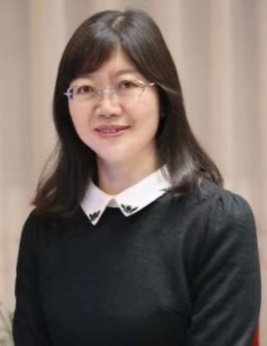
| Prof. Wei ZhangEast China Normal University, China Brief Introduction:Wei Z hang is a Professor and Ph.D. supervisor at the School of Computer Science, East China Normal University, and a full-time mentor at Shanghai Chuangzhi College. He has long been engaged in research in the fields of big data mining, machine learning, large language models, recommender systems, and intelligent education. He has published over 100 papers in internationally renowned journals and top-tier conferences, served as a chair for conferences such as NeurIPS, SIGKDD, and ACL ARR, and has led key projects under the Ministry of Science and Technology, four projects funded by the National Natural Science Foundation of China, as well as multiple industry-academia collaborative projects. His students have repeatedly won awards in both international and domestic academic competitions. Speech Title: Large Model–Driven Personalized Learning Abstract: Intelligent education represents a core intersection of education, technology, and talent development. With the rapid advancement of artificial intelligence, particularly deep learning technologies represented by large language models, and the continuous accumulation of student learning behavior data in the context of educational digitalization, it has become possible to achieve large-scale personalized learning. This report first discusses the demand for personalized learning and the development history of large models; it then introduces the key methods and technological progress of large models in personalized learning; next, it presents practical applications of large models in enabling personalized learning; and finally, it explores the future trends and opportunities in intelligent education. |
